1
The key starts on the chip
During setup the chip creates the private key. It is not typed in from a computer, and the computer does not keep a copy.
 quantumicy
Hardware wallet
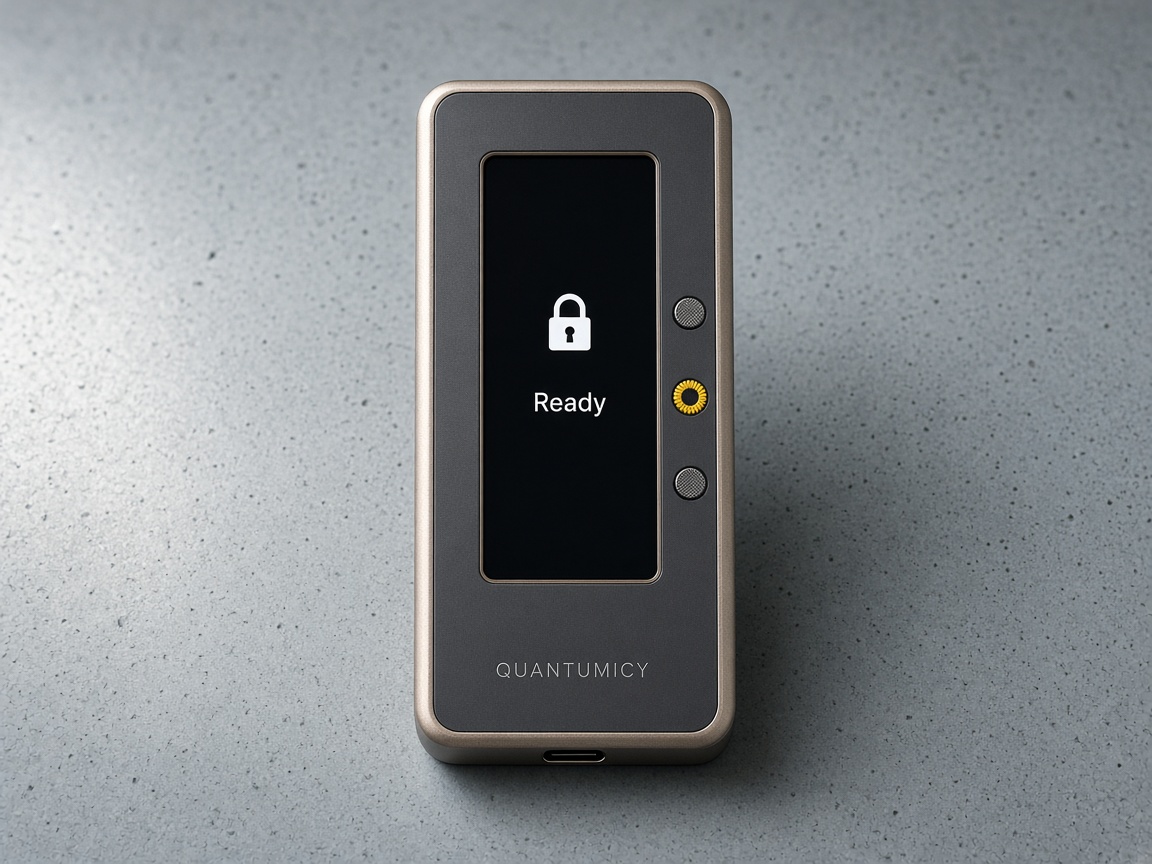
Quantumicy is a hardware wallet from RAD CAMP INC in Irvine, California. It is a tall slab that holds the private keys for cryptocurrency. The key is created on a chip behind the glass. A request is drawn on that glass, and the button with the yellow ring is the one that confirms it.
The object
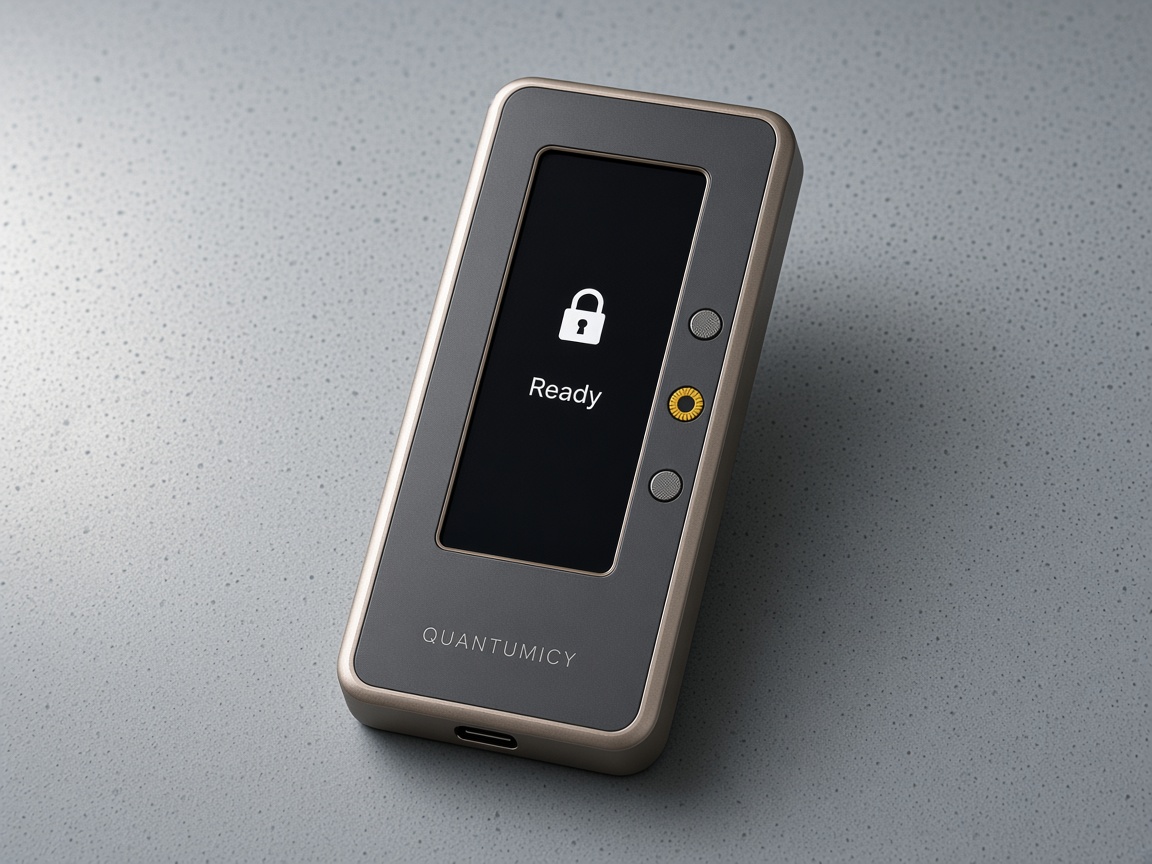
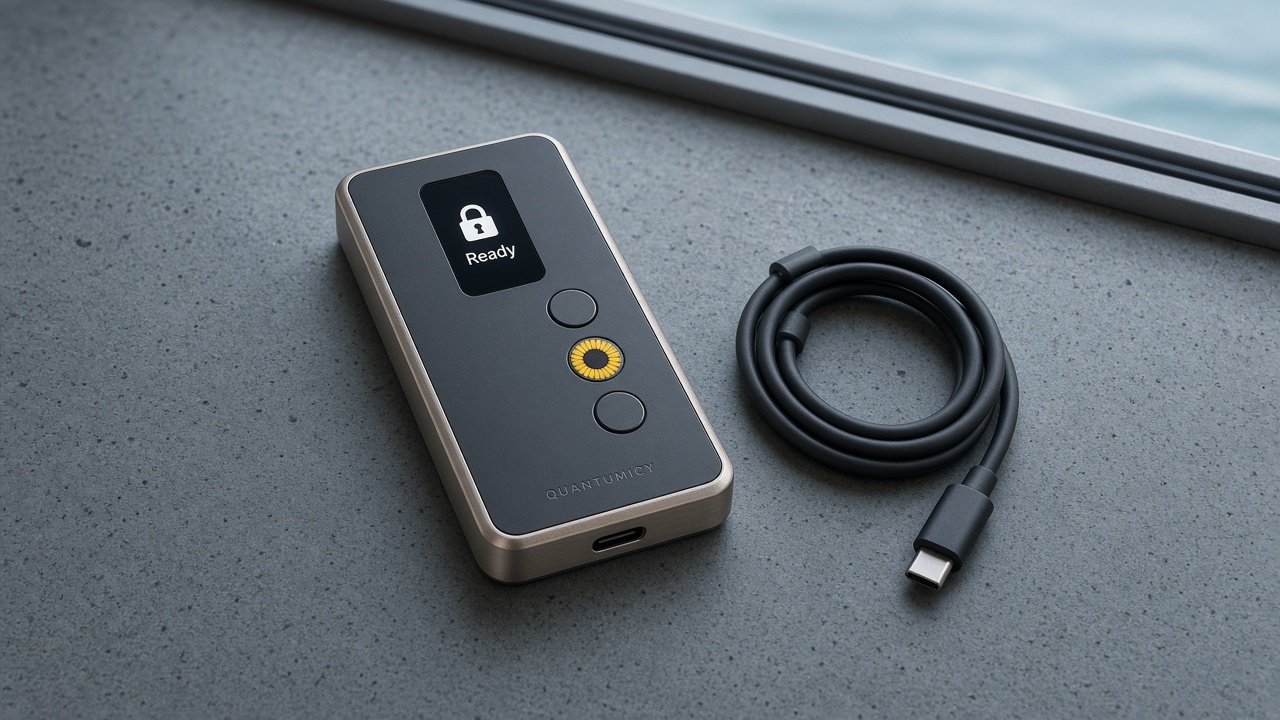
Quantumicy is a narrow bronze frame around a charcoal face, tall enough to stand on a desk. The screen is a vertical black rectangle. The name is engraved beneath it. Three round buttons sit in a column on the right, and the middle one wears a yellow ring.
USB-C is centered on the bottom edge. A sealed cell can keep the glass lit long enough to finish a reading after the cable leaves. That cell has no antenna. When the reading is done, the slab goes dark.
Why it is built this way
During setup the chip creates the private key. It is not typed in from a computer, and the computer does not keep a copy.
A request that arrives on the cable is drawn by the chip. If the glass is wrong, the yellow ring stays untouched.
Setup shows an 18-word recovery phrase on the device. You write it by hand and keep the paper away from the computer.
A session
A program on the computer can prepare a request. Quantumicy finishes it where you can see it.
The program cannot complete the request on its own. It can only pass the details to the slab.
Amount, destination, and any warning the chip raises appear on the glass. That view is the one that counts.
The middle button tells the chip to sign. The top and bottom buttons move through the screen or dismiss it. Without the middle press, the signature stays inside.
On the sill
Quantumicy sits dark. The buttons do nothing until a cable is connected, or until the sealed cell is asked to light the glass for a reading. A session with a computer begins at the USB-C port and ends when you are done with the glass.
Opening list
Quantumicy is gathering an opening list. A name and an email are enough. Three notes come back with that place.